

When a company begins to notice that its current system is too small, it faces the same dilemma: do I hire another SaaS or develop something custom? The question seems simple, but the decision conditions the next 5-10 years of operations, recurring costs and differentiation capacity.
There are articles on the internet that defend one or the other as if it were a religion. Here we're going to be honest: both options are good in their context, and choosing poorly is expensive in either direction. In this guide we give you the objective criteria to decide well.
1What a generic SaaS does well
Modern SaaS is not a bad default option. On the contrary: for many companies they are the best decision. Its strengths are real:
- Very low entry cost. You pay per user per month and tomorrow you have it working.
- Maintenance included. You don't worry about updates, security patches or infrastructure.
- You have a product polished by thousands of clients. If your case is standard, what the SaaS does is most likely better thought out than any MVP you could. order.
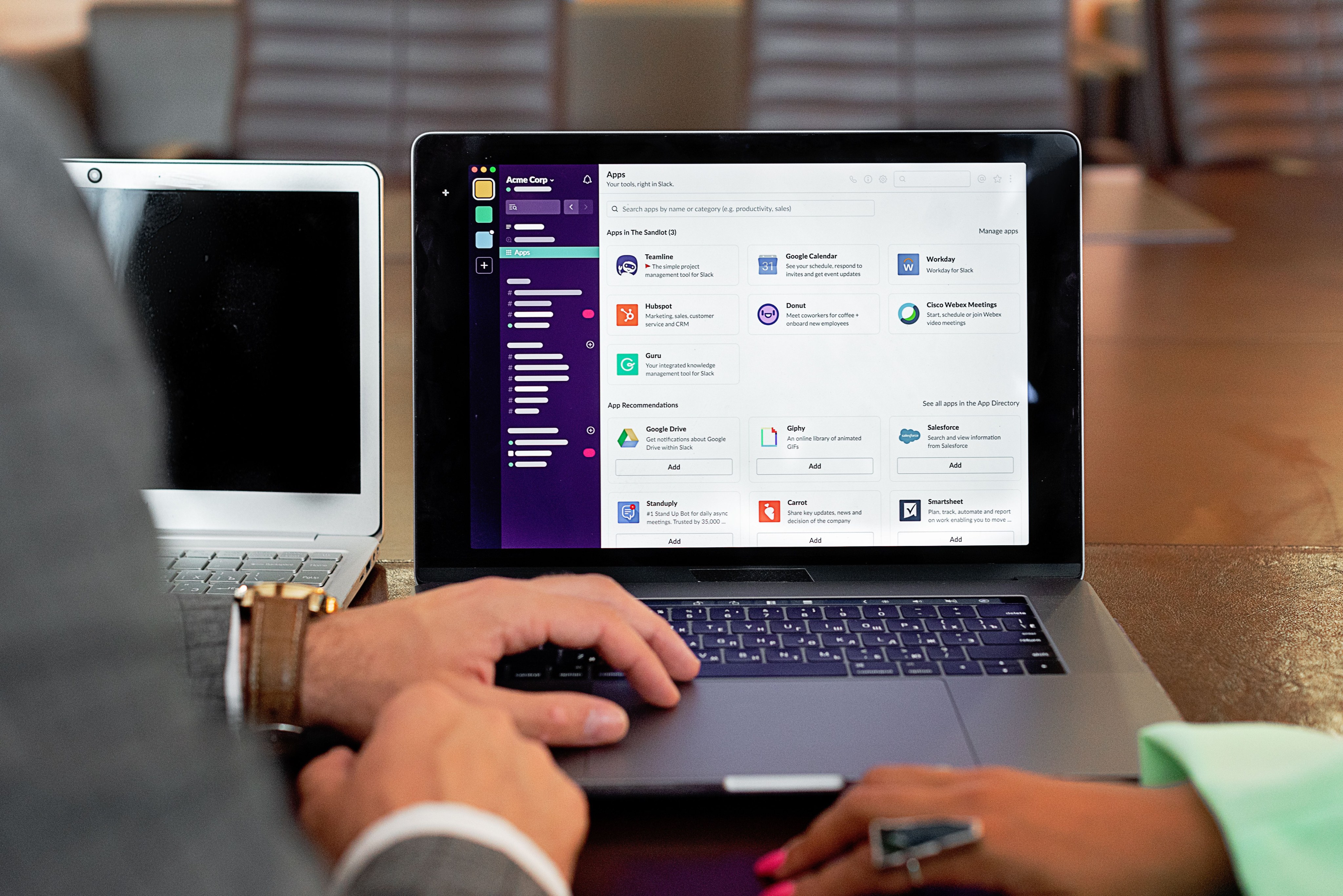
- Native integrations. Popular SaaS (HubSpot, Slack, Stripe, etc.) plug together with almost no code.
- Scalable down and up. If you go from 3 to 30 users, just change your plan.
If your process is standard and doesn't change much with the industry, a well-chosen SaaS will save you money and headaches for years.
2What a generic SaaS does wrong (when your case is not standard)
Here's the catch. SaaS are designed for the average customer, which means they make dozens of decisions for you that may or may not fit with how you work:
- Your process adapts to the system, not the other way around. If your SaaS CRM doesn't allow a specific field, you end up working "as if" that field didn't exist, or taking it to a parallel Excel.
- The data is on their server, not yours. Any reports the SaaS doesn't give you you will have to export it + Excel.
- Costs grow quickly. €15/user/month seems cheap until you have 25 users (€375/month = €4,500/year for a single tool).
- Roadmap out of your control. When the SaaS decides to change model, raise prices or discontinue features, you assume the cost of migrating.
- It is not differentiator.If your competition uses the same SaaS, you have no advantage by using it. It is a commodity.
3What custom software does well
A well-planned custom development solves exactly the problems that a SaaS cannot solve:
- The system fits into your process, not the other way around. The fields, views, flows and permissions are what you need.
- The data is 100% yours. Structure, export, integrations — without asking permission.
- No cost per user. 5 or 50 people in the system, same base cost.
- Strategic differentiator. If your internal system does something that your competitors can't easily do, that's a real advantage.
- A single source of truth. Instead of 6 scattered SaaS, one platform that connects what you need how you need it.
4What the software does wrong measure
We are not going to sell smoke. Custom development also has clear cons:
- High entry cost. A decent platform starts at €8,000-15,000. It is not accessible for a company that is starting out and does not bill enough.
- Time to production. A serious project is 2-6 months, not days.
- You depend on who built it. If the developer disappears and did not deliver reasonable code, you are trapped.
- Maintenance is your responsibility. You have to pay for hosting, patch security, evolve the system.
- It is not "instant". Each new feature requires coordination, budget and time.
5The 3 questions you should ask yourself before deciding
Before choosing, honestly answer these three questions:
5.11. Is my process standard or atypical?
If you could explain to an industry consultant how you work in 10 minutes and they would say "ok, that's typical," a SaaS would probably fit you. If you have to explain particular rules for an hour and it's still not completely understood, tailoring makes much more sense.
5.22. How much do I pay today for SaaS and subscriptions?
Add EVERYTHING: CRM, billing, email marketing, project management, storage, vertical tools... If you spend €800-€1,000/month (≈€12,000/year) on dispersed tools, custom-made tools begin to have a reasonable payback in 12-18 months.
5.33. Is my software a differentiator or a commodity?
If you sell marketing consulting and use HubSpot, your HubSpot is not what differentiates you. But if your value proposition includes a particular way of managing your customers that your competitors do not easily replicate, the internal system IS part of your product, and developing it well is investing in your advantage.
6The most common mistake: "let's put together 6 SaaS"
When a company rejects custom development due to budget, it usually falls into the opposite pattern: chaining 5-7 SaaS with Zapier in the middle. It works for a while, until:
- One of the integrations breaks and you spend a whole day repositioning data by hand.
- SaaS A updates its API and suddenly Zapier doesn't export well to SaaS B.
- You need a new field and it turns out that SaaS A doesn't support it, so you have to change the ENTIRE flow.
- The combined monthly cost exceeds what it would cost to have it custom made from the beginning.
The “all SaaS” stack makes sense at first. But if you have had to add 3 tools in the last year, seriously consider whether you are not paying twice the cost of the customized platform you would need.
7Cases where custom almost always wins
Although each case is unique, there are profiles where we systematically recommend custom:
- Companies with distinctive internal operations (regulated sector, specific niche, processes owners).
- Digital products where the software IS the product.
- Companies with 20+ internal users where the cost per user of SaaS already weighs.
- Companies that want to offer a portal to their customers (end customer, distributor, partner) — SaaS portals tend to be inflexible and not very customizable.
- Companies with integrations complexbetween systems (ERP + CRM + production + billing) where each SaaS only covers one piece.
8The next step
If you have finished this article with reasonable doubts about whether custom makes sense in your case, the best way to clear up doubts is to talk to someone who has been doing it for years. At Medel Platforms we build custom platforms for companies that are exactly at this crossroads.
The first conversation is always free and without obligation: we understand your situation, we give you an honest opinion (yes, sometimes we will recommend that you stay with your SaaS if we see that it is reasonable) and, if the custom fits, we give you a realistic range of investment and deadlines.
Ask for your free evaluation → Without a cold-fixed quote and without selling you smoke.